We get asked a version of the same question most nights: why does bread from a clay oven taste different from bread out of a normal kitchen oven? The honest answer is that it isn't really about the bread at all. It's about the box the bread cooks in.
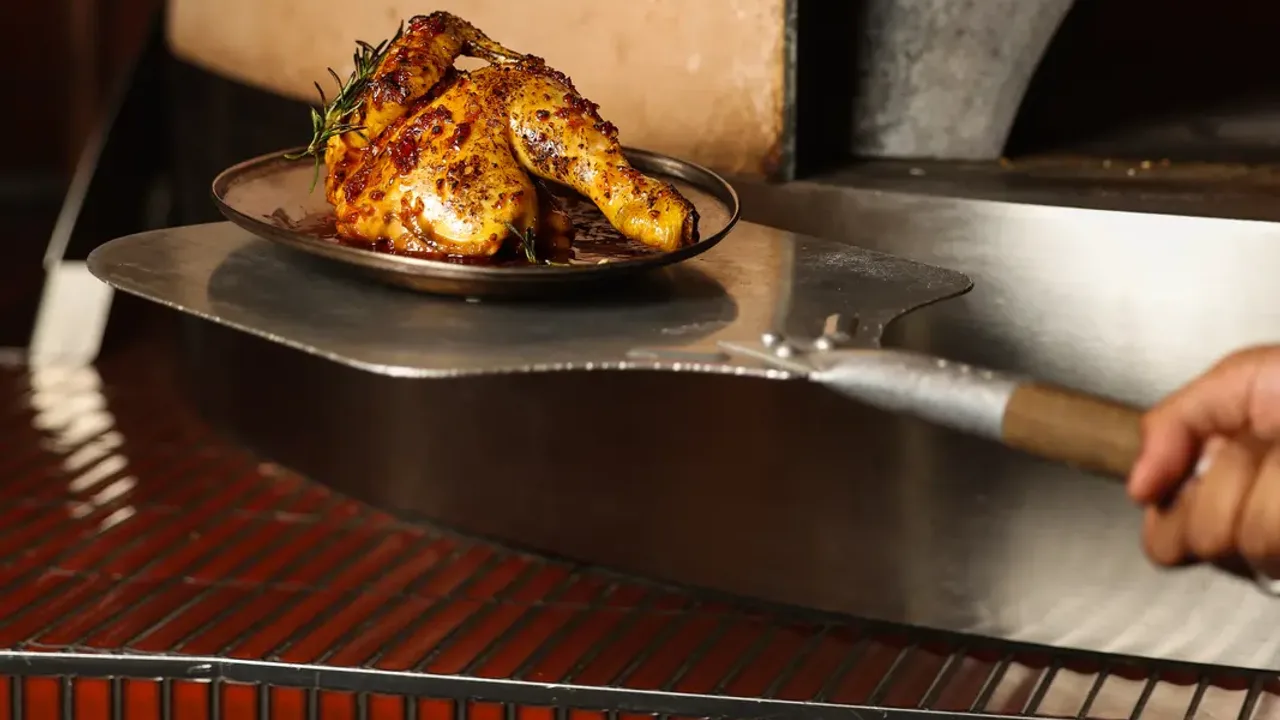
A tabun is a clay chamber, usually rounded, fired with wood or charcoal until its walls themselves are hot enough to radiate heat back at whatever is inside. That's the part that matters most. In a standard oven, hot air circulates around food. In a tabun, the clay itself becomes a store of heat, and it pushes that heat into the dough or the vegetable from every surface it touches. The air matters less than the mass.
What that heat actually does to dough
Flatbread cooked in a tabun blisters almost immediately. Within a minute or so of contact, pockets of steam trapped inside the dough push against the crust, and because the crust is setting so fast in the ambient heat, those pockets stay put rather than collapsing back down. You get char in some spots, soft give in others, and a surface that's uneven in a way a conveyor oven can never quite produce, because a conveyor oven is built for consistency and a tabun is built for intensity.
We shape and bake bread to order rather than in batches, partly because the oven doesn't really allow batching in the way a deck oven does. Each piece of dough goes in, gets watched, and comes out within a narrow window of time. Wait too long and it's dry rather than charred. Pull it too early and the centre never sets. There isn't much room for error, which is part of why we treat it as a skill on its own rather than a side task in the kitchen.
Vegetables behave the same way, just faster
This is the part that surprises people more than the bread does. A tabun's heat doesn't discriminate between dough and, say, a whole aubergine or a stone fruit. What it does is collapse the outside of whatever goes in almost immediately, sealing in moisture while the skin chars and splits. On our menu you'll find dishes like grilled nectarines with burrata, where that same principle applies: high, dry heat hits the fruit's surface hard enough to caramelise its sugars and soften its structure, but the interior stays close to raw, so you get contrast in a single bite rather than a uniformly cooked result.
Compare that to roasting a vegetable slowly in a conventional oven, where the heat is gentler and more even, and the vegetable cooks through more or less uniformly. A tabun doesn't really do "cooked through." It does "cooked hard on the outside, barely touched on the inside," and that's a texture profile you can't fake with a lower, longer heat.
Why we don't try to make it consistent
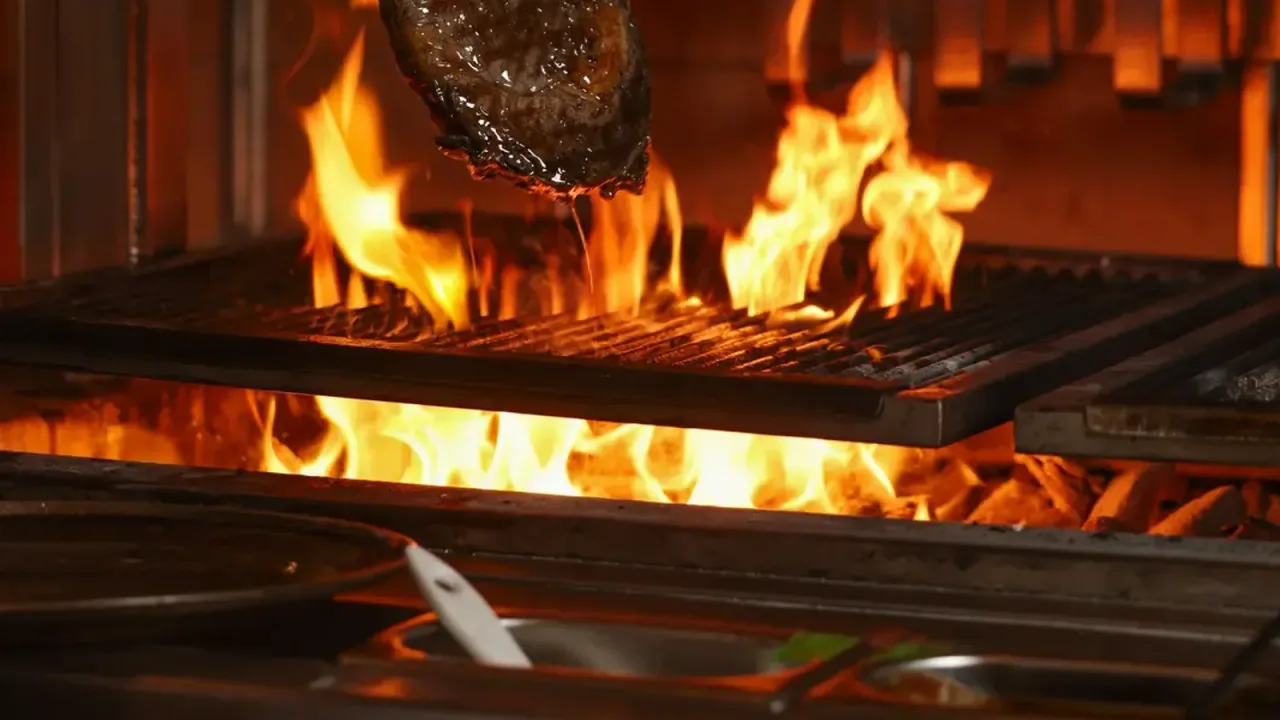
If you've eaten at enough restaurants that use live fire, you'll notice something: none of the char marks match. That's not a flaw we're covering for, it's the actual result of cooking with wood or charcoal instead of gas or an electric element. The heat inside a tabun isn't uniform the way a thermostat-controlled oven is. It shifts as the fire burns down, as more air moves through, as the clay itself heats unevenly depending on where the fire sits.
What that means practically is that a chef working a tabun is reading it constantly, moving food around inside the chamber, adjusting timing based on how the fire is behaving that particular hour rather than following a fixed number of minutes. It's less like following a recipe and more like following a fire.
The trade-off nobody mentions
None of this is free. A tabun is slower to fire up than a gas oven, harder to hold at a stable temperature, and less forgiving of distraction. You can't set a timer and walk away. But the reason kitchens keep choosing this method, generation after generation across the Levant and the wider Mediterranean, is that the texture it produces (that contrast between char and softness, between blister and give) isn't something a more convenient oven replicates. The inconvenience is, in a fairly direct way, the point.
At Kāio, that's the logic behind putting the tabun at the centre of the kitchen rather than treating it as one tool among several. Bread and vegetables cooked this way aren't dressed up with extra ingredients to compensate for anything. The oven is doing most of the work before a dish reaches the table.