Ask three chefs which heat source is "best" and you'll get three confident, contradictory answers. That's because the question is usually framed wrong. Gas, charcoal and wood aren't competing versions of the same tool. They behave differently enough that comparing them fairly means looking at what each one actually does to food, not just which one sounds more romantic on a menu.
Gas: control, at a cost
Gas is the easiest of the three to defend on paper. It ignites instantly, holds a set temperature reliably, and gives a chef precise control over heat output at any given moment. For a kitchen running high volume with tight ticket times, that reliability is valuable; nobody's guessing whether the flame is hot enough.
What gas doesn't do is add anything beyond heat. There's no combustion of wood sugars, no charcoal aroma, no variable flame intensity forcing a cook to adapt. Diners who've eaten a lot of grilled food tend to notice this first: gas-grilled dishes can taste clean and correct, but they rarely taste distinctive. The heat source itself contributes nothing to the flavour profile.
Charcoal: heat with character
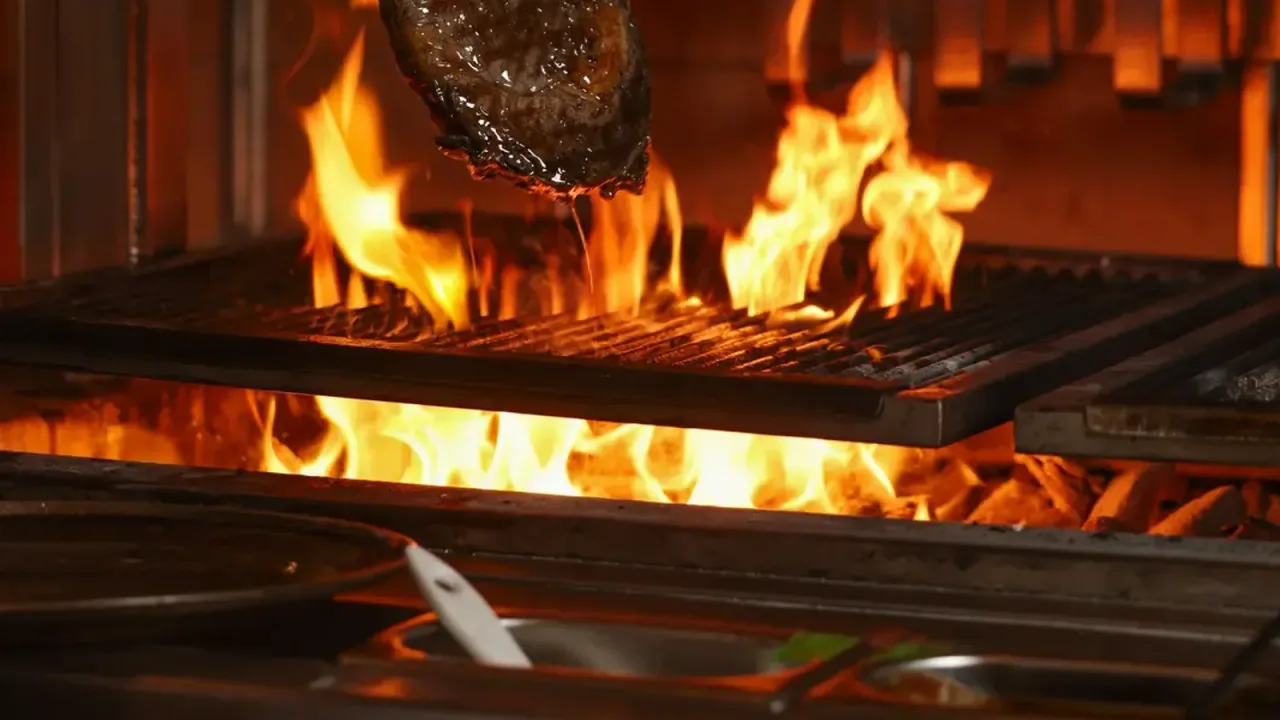
Charcoal changes the equation because it's not just a heat source, it's also a combustion process happening right next to the food. As charcoal burns, it releases compounds that settle onto whatever's above it, contributing a depth that gas simply can't replicate. It also burns hotter and less evenly than gas, which means the same skewer or cut can pick up char in one spot and stay tender a centimetre away, the kind of contrast diners often describe as "proper" grilling without quite being able to explain why.
The trade-off is control. Charcoal needs managing: it has to be lit, built up, and read constantly as it burns down, and a cook working it has to adjust position and timing rather than rely on a dial. Guests rarely see this part, but it's the reason charcoal-grilled dishes at a live-fire restaurant taste different from table to table over the course of a night, even when the recipe hasn't changed.
Wood: the slowest, most demanding option
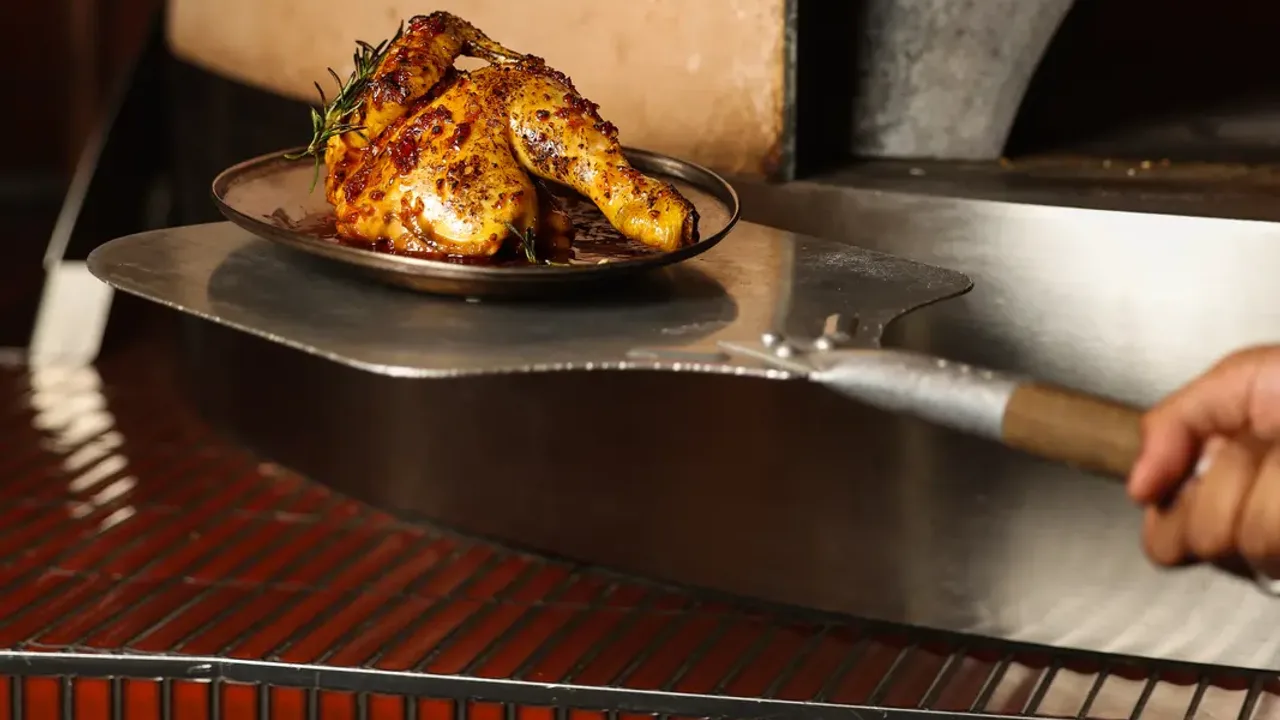
Wood-fired cooking, particularly in something like a tabun clay oven, asks even more of the cook. Wood burns unevenly, takes longer to reach working temperature, and produces heat that radiates from the surrounding clay or stone as much as from the flame itself. That radiant quality is what gives wood-fired bread and vegetables their particular texture: a fast, intense sear on the outside while the interior stays comparatively untouched.
Diners who've had bread cooked this way, alongside dishes like grilled nectarines with burrata or smoked maple with truffle, often describe a contrast between char and softness that's hard to pin on any single ingredient. That's the fire doing the work, not a sauce or a garnish compensating for a flatter cooking method.
The verdict
None of these three is objectively superior in every context. A busy gas kitchen turning out consistent plates at speed is doing its job well. But for restaurants built around flavour depth and texture contrast rather than pure throughput, charcoal and wood consistently outperform gas on the plate, precisely because they're harder to control. The inconsistency that makes them frustrating to manage is the same quality that makes the food more interesting to eat.
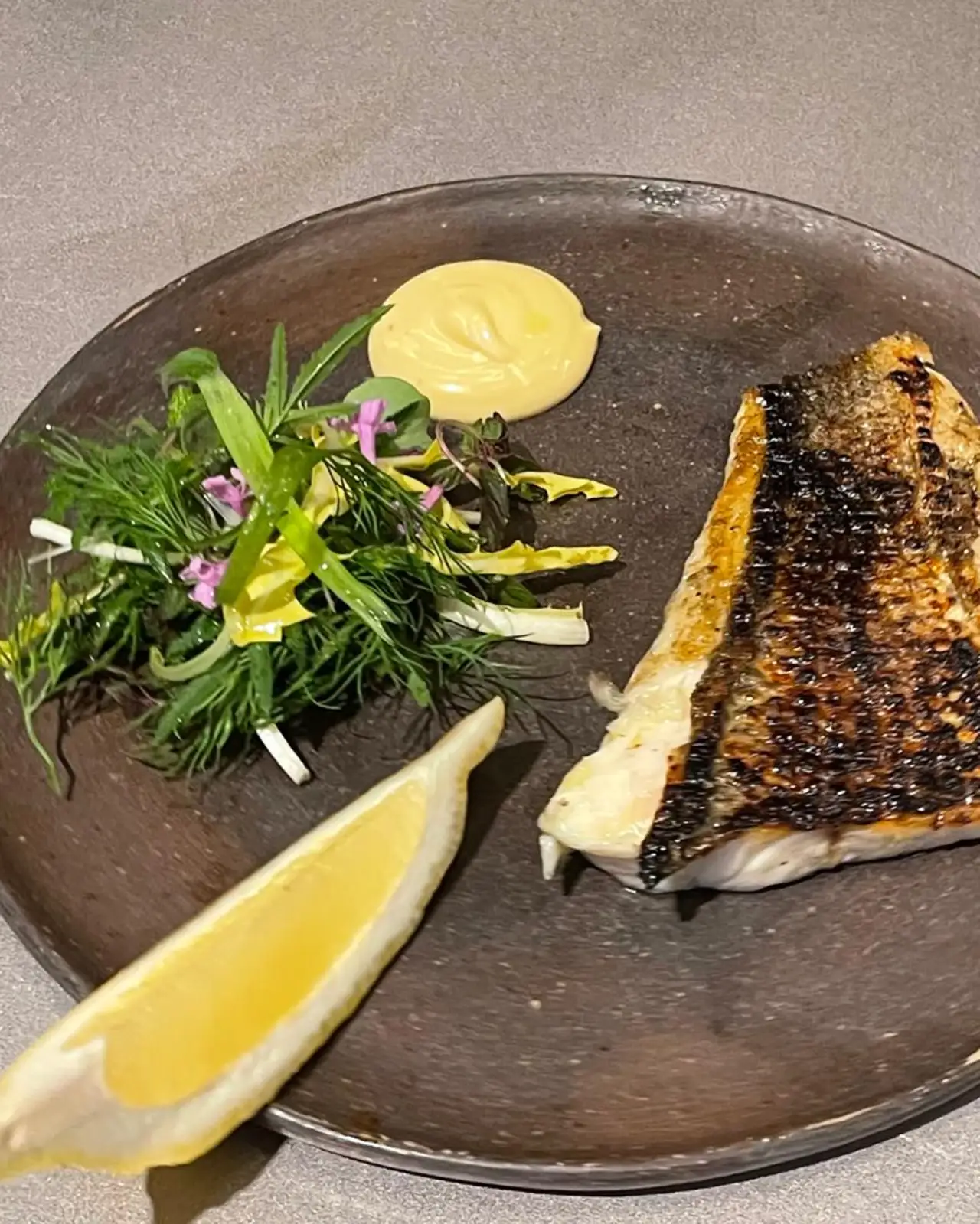
At Kāio, the kitchen runs on a tabun oven and a charcoal grill rather than gas, and that's a direct reflection of this trade-off. It means service is slower to set up and less forgiving of a distracted cook, but it also means the Mediterranean and Levantine-influenced dishes coming off that fire carry a depth that a gas-fired equivalent wouldn't match. Guests who've eaten across London's grill scene tend to notice the difference within the first course, in the unevenness of the char as much as anything on the seasoning list.
If you want to taste that difference directly rather than just read about it, Kāio's dinner service runs Tuesday to Saturday at The Whiteley in Bayswater, with reservations available through SevenRooms.